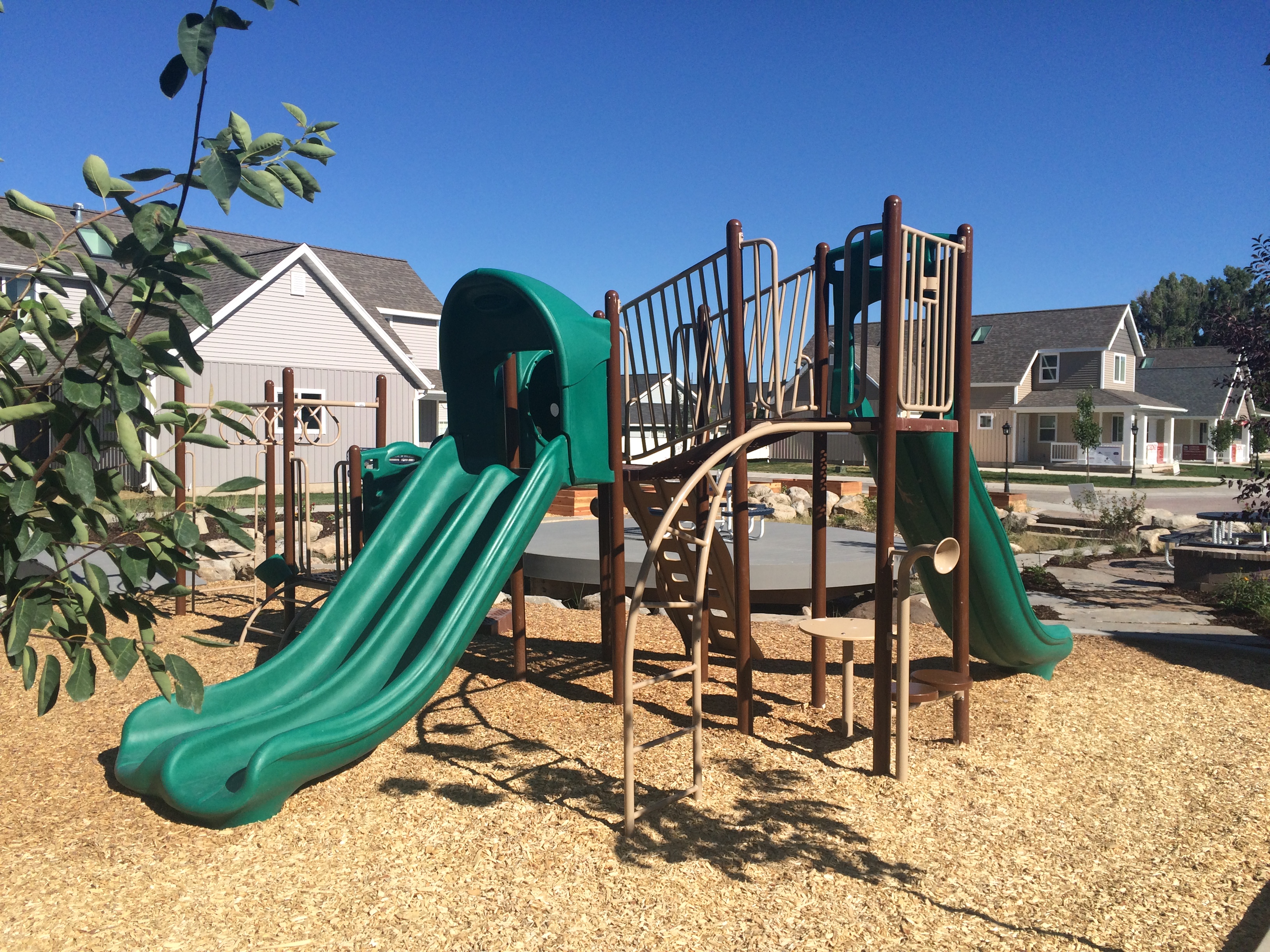
CAPSA is excited to announce Fight Against Domestic Violence, an international foundation based out of Salt Lake City, will be sponsoring the playground in Independence Place for $6,000 per year.
Background
I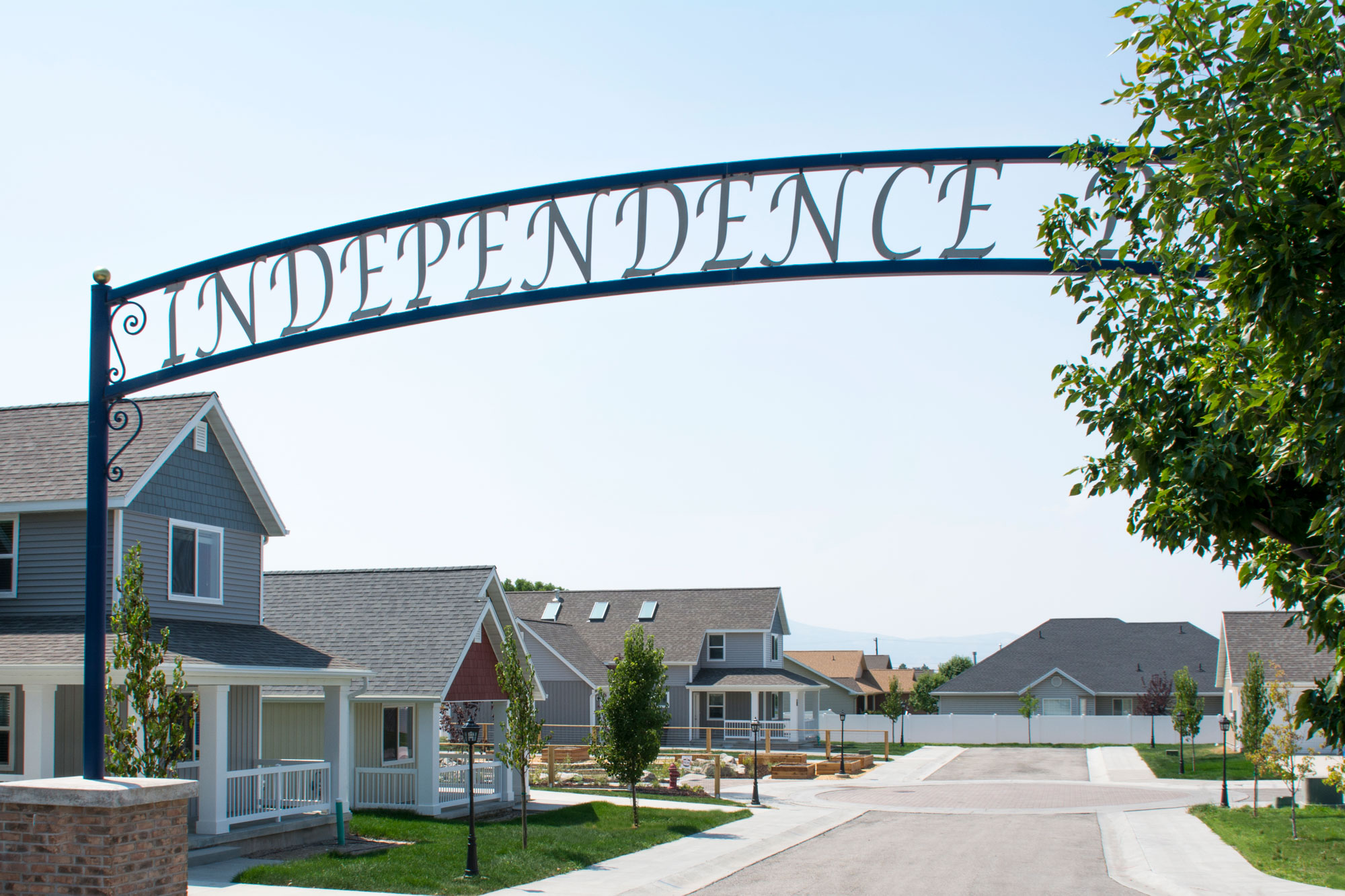 ndependence Place, a neighborhood owned and operated by CAPSA, is made up of nine single family homes, a playground, and a neighborhood garden. Part of a larger transitional housing program, Independence Place allows for more flexibility to support families who may not qualify for other housing opportunities. While in CAPSA’s Transitional Housing Program, participants receive housing assistance and continue to work with CAPSA staff for up to two years as they work on life assets.
CAPSA is the first and only nonprofit domestic violence shelter in Utah to build their own neighborhood. Independence Place is considered a flagship transitional housing program for the state of Utah.
“Our clients really start to heal once they are safe and have a place to call home. This is why finding housing is among the first priorities when families enter our emergency shelter,” stated Jill Anderson Executive Director of CAPSA. “The vision of Independence Place is to ensure CAPSA is always able to provide housing to our clients now and in the future. By owning our own housing, it allows us to help more of our clients and their families start new lives free from abuse.”
Independence Place broke ground in 2011 and was completed in 2015. The neighborhood was fully funded by private donations from foundations, businesses, and individuals including the George S. and Dolores Doré Eccles Foundation, the Sorenson Legacy Foundation, Wasatch Property Management Group, Conservice, Sports Academy, Riverwoods Conference Center, Schreiber, and many individual donors. Since 2015, CAPSA has been able to provide housing assistance and housing to an average of 30 families per year.
Independence Place Sponsorship
As a nonprofit, CAPSA relies on community support both financially and through direct support. The Independence Place sponsorship program accomplishes both by raising money to cover many of the neighborhood expenses and fund other outreach services and offset some maintenance cost. It is also to connect the community to CAPSA and demonstrates to our clients they are supported.
“The vision of this sponsorship program is more than just raising money. It is linking the community to CAPSA by giving them ownership in their sponsored home,” stated James Boyd Development Director at CAPSA. “We want these organizations to feel like these homes are their homes. We put their name of the home and give them multiple service project opportunities.”
The amount of $6,000 is the average cost for CAPSA to subsidize housing for our families.
“It is amazing to see how the healing really begins when a family is in a safe home. They begin on a path that changes generations,” stated Anderson. “$6,000 is really a small investment for this family and for our community. We are lucky to have great businesses in our community, and now across the state, who can see this vision and want to support this program and these families.”
Lewiston State Bank became the first home sponsor in January 2018. “This program does so much for our community, and we are happy to be a sponsor,” said Judd Austin, president of Lewiston State Bank. “The Bank takes pride in being an annual sponsor.”
Other businesses join Lewiston State Bank as an ongoing sponsor including Malouf Foundation, Icon Foundation, and MW Construction.
Fight Against Domestic Violence
 Fight Against Domestic Violence (FADV) is committed to providing education, awareness, outreach, and resources to domestic violence victims and those who support them.
FADV’s Executive Director, Dr. Jessie Richards, is an Aggie and a long-time supporter of CAPSA and Cache Valley. “CAPSA is such an inspiration,” stated Richards. “It is one of the first shelters to implement a ‘zero-turn-away’ policy, which means it is constantly innovating new ways to support survivors.” Because of her relationship to Logan, FADV has also financially supported research on domestic violence at Utah State.
“CAPSA is a leading voice in Housing First policies, creating safe and stable environments for survivors. We want to be part of their innovation,” stated Brooke Muir, FADV’s Program Director. Muir, and Richards, along with Stephanie Buehner, FADV’s Outreach Director, chose to sponsor CAPSA’s playground at Independence Place starting in January of 2019. “We know how crucial it is for children to feel safe and happy while they are in transitional housing.” Stated Buehner. “That’s why this playground is so important to FADV and to the larger community.”
 In addition to sponsoring projects such as the Independence Place playground, FADV provides funds to service providers all over the state. Over a million people each year will experience domestic violence in their lifetime. To provide the best care for victims/survivors, service providers rely on support from corporations and individuals, as federal funding does not fully meet many crisis needs. FADV works to fill those funding gaps by distributing unrestricted “Crisis Cash” grants and facilitating other donations and resources to help support survivors. To get involved, or to become a corporate partner making changing in our community, visit www.fadv.org or send an email to Stephanie@fadv.org.
CAPSA still sponsorship opportunities for four of the homes and the neighborhood garden. By becoming an annual sponsor of a home, an organization will receive signage one of CAPSA’s home, public recognition, and optional team building service opportunities. To secure your sponsorship please contact James Boyd at (435)753-2500 or james@capsa.org.
About
CAPSA is a Cache Valley nonprofit domestic violence, sexual abuse, and rape recovery center serving northern Utah. CAPSA provides trauma informed services including advocacy, emergency shelter, transitional housing, and clinical therapy for women, men, and adolescence impacted by abuse. All services are FREE and confidential. Please call our support line anytime at (435)753-2500 to speak with a trained advocate. Learn more about CAPSA at www.capsa.org.
Fight Against Domestic Violence (FADV) is a 501-c3 organization committed to providing education, awareness, outreach, and resources to domestic violence victims and those who support them. Learn more at www.fadv.org.
Contact
James Boyd, Development Director for CAPSA, james@capsa.org, 435-760-5277 (cell)
Jessie Richards, Executive Director for FADV, Jessie@fadv.org, 801-792-0543 (cell)
Stephanie Buehner, Outreach Director, Stephanie@fadv.org, 801-541-4941 (cell)
 Dr. Christy Glass received her Master’s and PhD in Sociology from Yale University. Following her graduation, she began teaching at Utah State University in 2005. In 2016, she was named