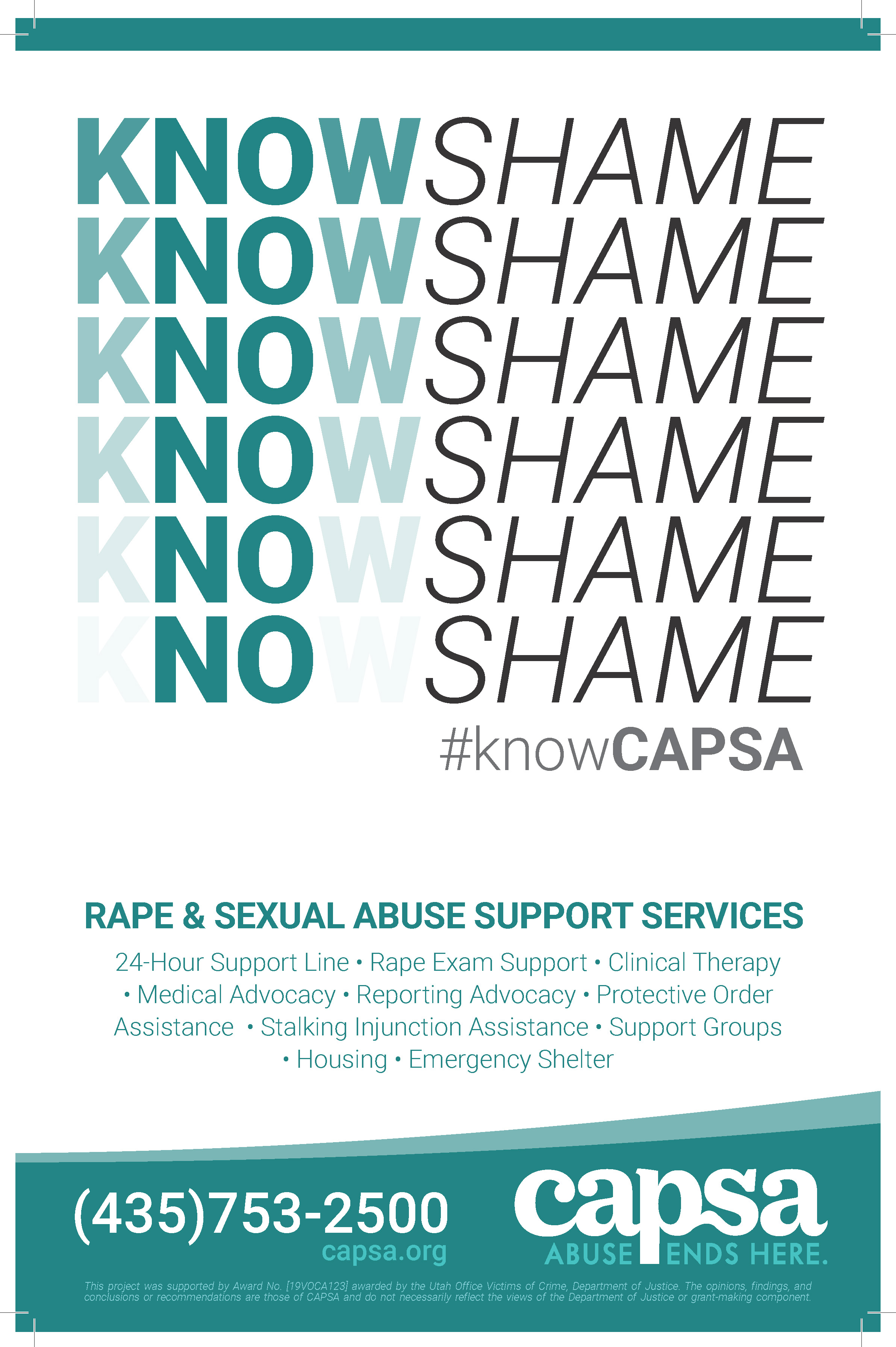
CAPSA provides support services for individuals and families impacted by domestic violence, sexual abuse, or rape.
A core service is our 24-hour Support Phone Line for those who have experienced abuse or are supporting a friend or loved one.
What is the purpose of the Support Line?
CAPSA’s 24-hour Support Phone Line is answered by trained Advocates who are there to provide information and connect individuals with support services.
The Support Line is confidential. This means your information is not given to parents, family, loved ones, police, or anyone else without your consent. You are free to share what you feel comfortable with, ask questions, and get answers without being required to commit to proceeding further. The Support Line is there for support, does not require you to start any service with CAPSA.
NOTE: CAPSA is required to report instances involving elderly adult abuse or child abuse.
CAPSA can help if you are calling because you need a safe place to escape abuse, or need support helping a friend who has experienced sexual assault or domestic violence.
Who Works the Support Line?
The Support Line is answered by trained CAPSA employees who are trauma-informed and start by believing. This means they are prepared to listen to your needs and understand how best to assist, whatever the situation may be.
Our Advocates specialize in dealing with diverse needs and provide access to specific resources to help you overcome the challenges you are facing.
Who the Support Line is Designed to Help?
The Support Line is designed to be a resource for everyone in the community. Individuals can reach out for themselves or loved ones, and other organizations often refer clients through it. Police who respond to domestic violence calls use it to get support, ask questions and connect those who need help, directly to CAPSA.
If you are fleeing sexual assault or domestic violence and need support, or you are supporting a friend or loved one recovering from it and want to know how you can best help them, please call CAPSA’s Support Line at 435-753-2500.
https://www.capsa.org/wp-content/uploads/2019/10/Untitled-1.png315800Maddie Sotohttps://www.capsa.org/wp-content/uploads/2023/04/capsaLogo.pngMaddie Soto2019-10-08 08:48:352019-10-08 08:49:21Support Phone Line
CAPSA has been awarded two grants from the Utah Office for Victims of Crime to bring awareness to CAPSA’s domestic violence, sexual assault and rape support services
CAPSA is a nonprofit domestic violence, sexual assault and rape recovery center serving Cache and Rich Counties. Last year CAPSA served 1,551 women, men, and children and provided community education to 30,533 participants. CAPSA’s support services includes 24-hour support phone line, emergency shelter, casework, rape exam advocacy, prevention education, and clinical therapy. All of CAPSA’s services are FREE and confidential.
“CAPSA is the local expert on safely escaping and starting a new life after domestic violence, picking up the pieces after rape, and healing from associated trauma from both. When someone reaches out to CAPSA, they can expect to speak to an expert who believes, does not judge, and will not disclose what is shared,” stated Jill Anderson Executive Director of CAPSA. “The individual is in control during the whole process. They determine the direction they want to take and CAPSA then helps them safely and successfully reach their goals.”
CAPSA has been awarded two grants from Utah Office for Victims of Crime (UOVC), Department of Justice – one provides funds for services awareness for sexual assault and rape support services and the second to fund service awareness for domestic violence support services. These funds allow CAPSA to run a multichannel awareness campaign utilizing radio, print, social media and other channels over the next 10 months.
Two examples of marketing images for the KNOW campaign
“There is a major need for service awareness. When someone needs CAPSA, it is often life or death. Yet, if someone does not feel their abuse qualifies, misunderstand CAPSA’s services or sadly does not know CAPSA exists, then they will not call CAPSA and take the first step to safety and healing,” stated James Boyd Development Director for CAPSA. “With this in mind, CAPSA will launch the Know Campaign.”
The KNOW Campaign, developed by CAPSA, is designed to empower survivors of sexual abuse, rape, and domestic violence while bringing awareness to the breadth of services CAPSA offers. Messages include Know Peace, Know Hope, Know Happiness, Know your Choices, Know your Voice and Know CAPSA.
One of four launch posters being displayed in businesses and public spaces beginning 9/25/19
“Victims of sexual abuse, rape, and domestic violence often feel shame and isolation. These feelings mean many suffer alone and do not receive help,” stated Boyd. “This campaign is designed to show these individuals they are not alone, help is available, and there is a future where they will be able to again KNOW PEACE. We know bringing awareness to CAPSA services will result in more people seeking support, safety, and healing.”
CAPSA has developed the KNOW Campaign and is responsible for messaging and content.
“We are grateful to the Utah Office for Victims of Crime for their recognition of the need for service awareness and willingness to fund it,” stated Anderson. “There are so many suffering and this campaign will let them KNOW there is HOPE.”
About CAPSA
CAPSA is the state and federally recognized domestic violence, sexual assault, sex trafficking, and rape crisis and recovery center for Cache and Rich counties. Founded in 1976 on the campus of USU as a rape resource, CAPSA has expanded to provide emergency shelter, clinical therapy, community education, casework, and other resources to those affected by abuse. Anyone who feels unsafe at home or within the confines of a relationship can call CAPSA’s 24-hour support phone line at 435-753-2500. A person in immediate danger should call 911.
# # #
Contact: James Boyd, Development Director for CAPSA, james@capsa.org, 435-760-5277 (cell)
https://www.capsa.org/wp-content/uploads/2019/09/Featured-Image3.png270795Maddie Sotohttps://www.capsa.org/wp-content/uploads/2023/04/capsaLogo.pngMaddie Soto2019-09-25 08:57:432019-09-25 09:31:39Press Release – Funding for Service Awareness
CAPSA provides Advocacy and Support services to survivors of domestic violence, sexual assault, and rape.
CAPSA provides specialized expertise
Just like if someone is diagnosed with cancer, they see an oncologist because they specialize in cancer – with domestic violence, sexual assault, and rape, CAPSA provides specialized expertise.
CAPSA’s Caseworkers are experts in this field and have experience overcoming the many barriers associated with abuse including housing, economic difficulty, legal concerns, court advocacy and more. CAPSA’s also has strong relationships with law enforcement and a deep network of outside resources to help our clients.
Function of Caseworkers
CAPSA’s Caseworkers work with each client and take the time to understand their unique situation. This includes conducting risk assessments, discussing safety plans, helping file protective orders, and connecting clients to other resources both within CAPSA and throughout the community to ensure each client has a feasible and safe path forward.
Every case is unique, and some situations make it difficult or unsafe for survivors to reach CAPSA. Our Caseworkers specialize in dealing with domestic violence, sexual assault, and rape, and they understand the challenges that come with these things. Caseworkers typically work from the office but are equipped to respond to need. They have in the past meet with clients at parks, in hospitals where they had appointments, and talked with them over the phone whenever safe, all to ensure those survivors got the help they needed.
CAPSA’s Caseworkers can do the same for you.
CAPSA’s Caseworkers can help you
If you are experiencing domestic violence, sexual assault, rape, or stalking, CAPSA can help. CAPSA’s Caseworkers will work to inform so that you can understand what is happening and decide for yourself how to move forward. They provide resources to overcome barriers and do not let things like credit score, lack of insurance, or legal status prevent anyone from getting help for their abuse.
Whether you are worried for your safety, concerned for your children, or just wanting your situation, CAPSA is there for you. Please, call our Support Line at (435) 753-2500 to speak with a CAPSA caseworker.
The Lethality Assessment Protocol or LAP, is a major tool used by both local law enforcement and CAPSA personnel. So, what is the LAP?
Originating from Maryland, Dr. Jacquelyn Campbell, of The Johns Hopkins University School of Nursing, studied the factors associated with domestic homicide within the state. She studied these cases for more than 25 years, and from her study, she found 20 warning signs indicating an individual was at high risk of being killed by an intimate partner.
Inspired by this research, the State of Maryland worked with Dr. Campbell to create an 11 question assessment to be used by law enforcement. Now when a domestic violence call comes in, officers ask the victim of abuse these 11 questions. Depending on the answers, victims are determined whether or not they are at high risk of being murdered by their intimate partner. If at high risk, law enforcement personnel connect the individual to a local domestic violence shelter.
In the seven years since implementing the LAP in Maryland, domestic homicides have reduced by 60%. Since implementing this system in Utah, more than 1,500 individuals have been identified as being in a high-risk situation. Because of the LAP, these 1,500 individuals are receiving the help they are in need of. Before the LAP, only 4% of these at risk individuals visited a domestic violence shelter or sought any type of aid in preventing or dealing with their abusive situation.
We’re grateful for our law-makers and officers for making the LAP a life-saving part of our response to domestic violence within the state.
Learn more about CAPSA and the LAP at the links below:
Most of us probably haven’t heard of NUVPEC, but it stands for the Northern Utah Violence Prevention Education Coalition. To learn more about it, I interviewed the coalition chair, Ana Hernandez.
Q. Can you tell me the history of NUVPEC – when and how it was started?
A. In 2009, CAPSA’s prevention department completed a curriculum for male and female peer-to-peer discussion groups. At that time, CAPSA employees felt it was important to create a coalition. It was called the Northern Utah Violence Prevention Education Coalition in order to address prevention efforts at the community level.
Our mission as a coalition is to reduce the incidences of sexual violence among youth in Cache County. The Northern Utah Violence Prevention Education Coalition aims to provide professional, respectful, sensitive and age appropriate prevention education to youth of all ages. NUVPEC will unite to implement developmental assets with an emphasis on positive values, social competencies and positive identities to help our future generations establish healthy, responsible and caring relationships.
Q. Who’s involved in NUVPEC?
A. Several organizations sit on NUVPEC: The Family Place, Alpha Chi Omega, the Logan Police Department, the Cache County’s Sheriff’s Office, Utah State University, Cache Makers, Pregnancy for Choices, the Department for Children and Family Services, Utah State’s Sexual Assault and Anti-Violence Information Office, Intermountain Healthcare, the Bear River Health Department and concerned citizens.
Q. What is NUVPEC doing in our community – what are the positive results you can point to from the program?
A. We hope that we are making a difference by raising awareness of domestic and sexual violence within our youth. Currently, we have several projects in the works.
Upstanding Youth Leadership Conference: Hosted at Utah State University on December 2, we have worked tirelessly with the Utah State Health Department and CAPSA to put this conference together. It is targeted specifically for Cache and Rich youth leaders, and we are hoping that by providing training by Marty Liccardo and other helpful workshops youth will be able to go back to their respective communities and teach their peers about making a difference and changing social norms.
Media Contest: Every year from January to the end of February the state of Utah holds a Media contest surrounding healthy relationships. This contest is for students, and NUVPEC participates by informing all the Middle and High School students about the contest and its theme.
Safe Dates: We partner with the Logan Police Department and the Fun Park to create an environment for youth to have fun while gaining an understanding of how to stay safe on a date and what to do if you feel uncomfortable at any portion of a night out.
Q. How are youth involved in NUVPEC?
A. NUVPEC raises awareness and holds events specifically for our youth. Members of the CAPSA Youth Council also help educate their peers with a member of NUVPEC.
Q. How does NUVPEC inspire and create youth leaders?
A. I hope that by making a difference the youth can see that they too can make a difference. A lot of times youth, and even adults, feel that in order to make a difference they have to be labeled as a leader. However, you do not have to be in any type of position (although it can be helpful) to make a difference and rise to inspire and be a leader.
Q. What have you learned from chairing NUVPEC?
A. When I started, I met with each member individually and listened to their concerns, ideas, and successes with the intention of making the coalition better. So far, I have been able to include more members from our community. I am also reaching out to the Latino community in hopes of bringing awareness to them,as well. I realize that although I am not perfect, I have learned that by showing others that I am human, that I care and that I am there to help them make a difference we become more united and are able to achieve more.
Q. What are the long-term goals of NUVPEC?
A. I want to continue inspiring youth to become the leaders of tomorrow. I also want to reach out to more community organizations and involve them in order to bring more awareness to families, and specifically youth.
https://www.capsa.org/wp-content/uploads/2023/04/capsaLogo.png00Maddie Sotohttps://www.capsa.org/wp-content/uploads/2023/04/capsaLogo.pngMaddie Soto2017-11-02 14:21:042017-11-02 14:30:00An interview with NUVPEC chair, Ana Hernandez